
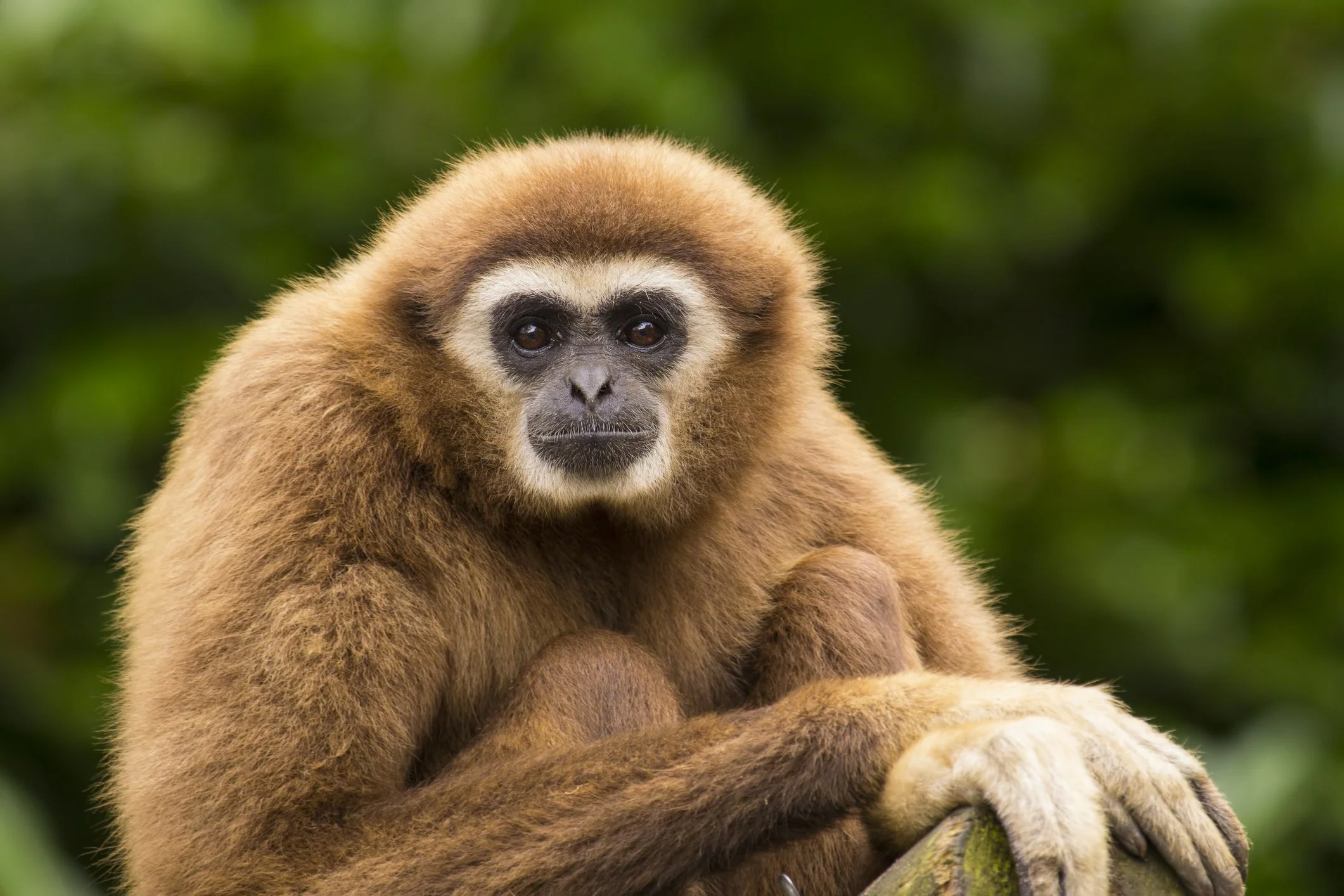
Gibbon Health Initiative
Advancing Gibbon Health through Science and Capacity-Building
Welcome to the Gibbon Health Initiative, a consortium of gibbon veterinarians, caretakers, and scientists working together to improve the well-being of these endangered apes in their natural habitats.
Southeast Asia is home to ~15% of the world’s tropical forests.
1.6 million hectares of these forests are lost every year.

The songs of gibbons have filled the forests of Southeast Asia for millions of years. These striking small apes, our closest relatives after great apes, are quietly disappearing.
All 20 species are now threatened with extinction due to palm oil expansion, deforestation, and wildlife trafficking.
As accelerated habitat loss forces gibbons in ever closer contact with humans, more gibbons need rescue from trafficking, disease, and injury. The stress of losing their homes has consequences for health, like poor immune function and higher risk of diseases.
Wildlife rescue and rehabilitation centers are on the front lines of safeguarding gibbon health. Their critical work returning gibbons to the wild helps counteract some of the anthropogenic pressures these endangered apes currently face.
Saving species requires dedicated wildlife health research and sustained support for the veterinarians and caretakers that treat them.

“Understanding the health of wildlife is critical for effective conservation and welfare. The Gibbon Health Initiative is bridging the gap in our understanding of gibbon health and diseases by bringing together knowledge from the wild, from zoological institutions, and from the rescue centres, while leading the way in training and supporting veterinarians from gibbon habitat countries.”
- Dr. Susan Cheyne, IUCN Co-Chair, Section Small Apes
Our Work
Our work is focused on making in-country gibbon conservation efforts sustainable. We support in situ gibbon rescue and rehabilitation programs by building clinical capacity. Gibbon medicine should also be evidence-based: we conduct gibbon health research to better inform more targeted care for the global gibbon community.
Our Team
In partnership with the IUCN Section for Small Apes, over 20 centers across 8 countries in South and Southeast Asia are working together to improve the health of endangered gibbons and increase survival rates during rehabilitation and after release back into the wild.

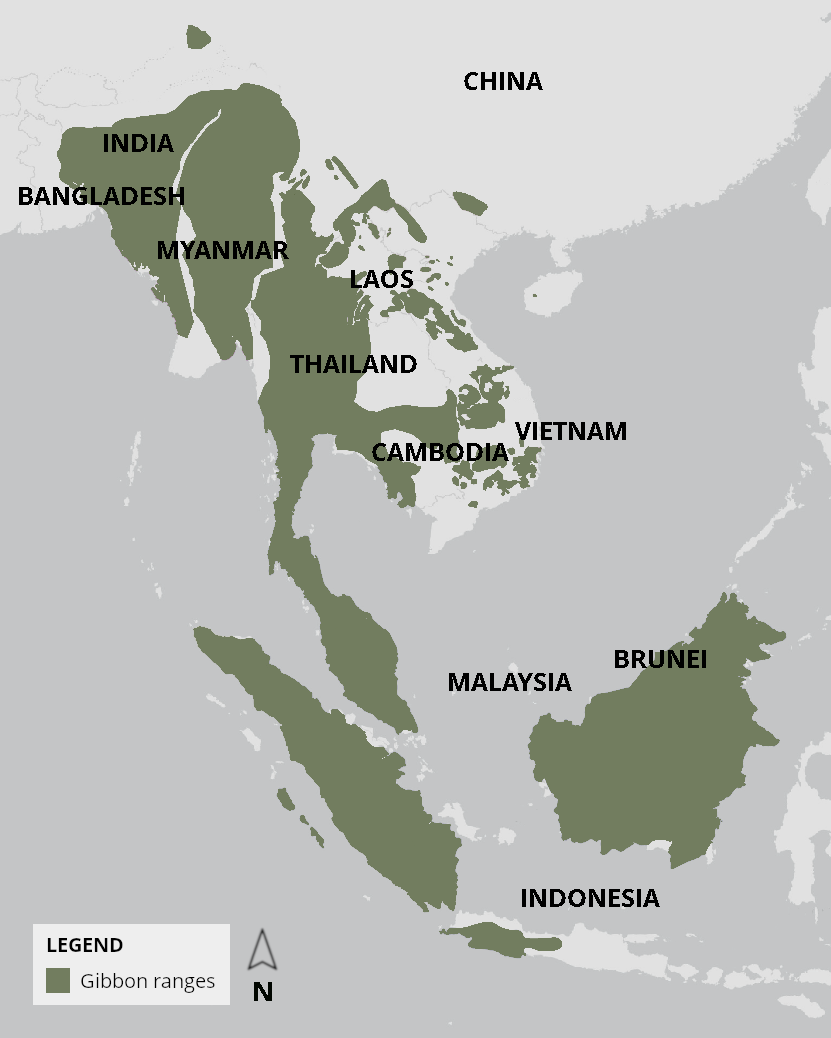
Gibbon Range Countries
Our work is focused in the South and Southeast Asian gibbon range countries with rescue and habilitation centers. Located in critical habitats, these centers are a crucial lifeline for gibbon survival.