
About Gibbons
What Are Gibbons?
Gibbons are apes: a taxonomic group of tailless, primates that also includes humans. The family Hylobatidae, often called “small apes”, comprises four genera (Hoolock, Hylobates, Nomascus, and Symphalangus) and 20 recognized species. Although humans and gibbons phylogenetically diverged millions of years ago, we still share approximately 96% DNA (Wang et al, 2026).
Gibbons are highly arboreal, spending nearly their entire lives sleeping, feeding, and traveling high in the forest canopy, rarely descending to the ground. Their arms, roughly 1.5 times the length of their legs (Michilsens et al., 2009), allow them to brachiate (swing) through the treetops at reported speeds of up to 55 km/h, covering up to 10 meters in a single swing.
Unusual among primates, gibbons are largely socially monogamous (Reichard, 2003), living in small family units that defend their territories through elaborate, far-carrying vocal displays.
Gibbons are small apes famed for their musical calls. These remarkable apes are among our closest living relatives, yet all are threatened with extinction.
Songs That Define Them
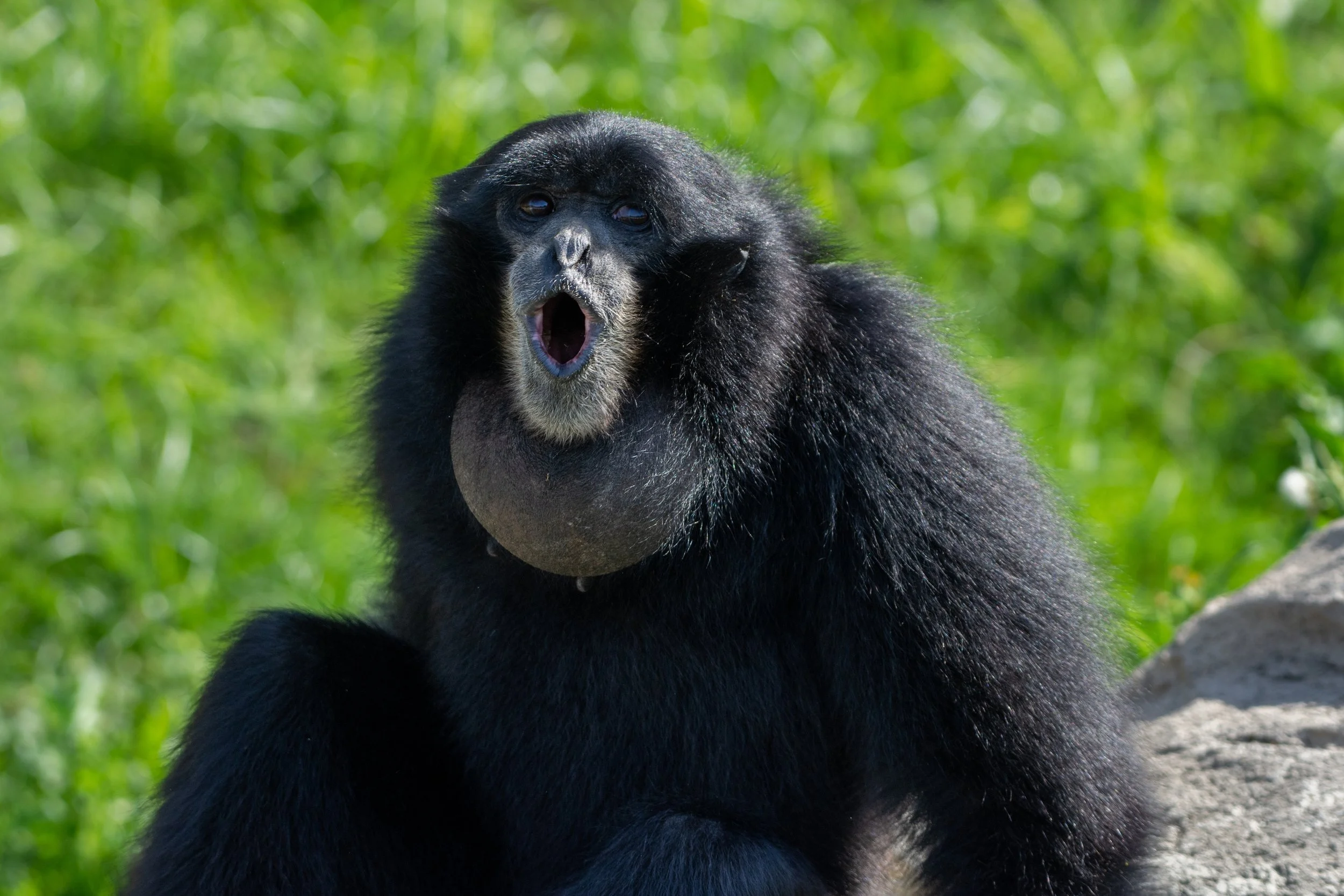
Gibbon duets are among nature's most complex vocalizations. Mated pairs sing coordinated songs lasting up to 15 minutes, audible for a kilometer or more (Geissmann, 2002). Each pair develops a unique duet pattern, which they perfect over weeks of practice (Geissmann, 1986; Maples et al., 1989). These songs serve multiple purposes: defending territory, reinforcing the pair bond, warning of predators, and coordinating family movement through the canopy (Clarke et al., 2006).
The Ecological Importance of Gibbons
As primary seed dispersers in tropical and subtropical forests, gibbons play a critical ecological role. They consume fruit from dozens of plant species (Chen et al., 2023), carrying seeds far from parent trees as they travel through the canopy. When gibbons disappear, forest regeneration suffers, with cascading effects throughout the ecosystem.
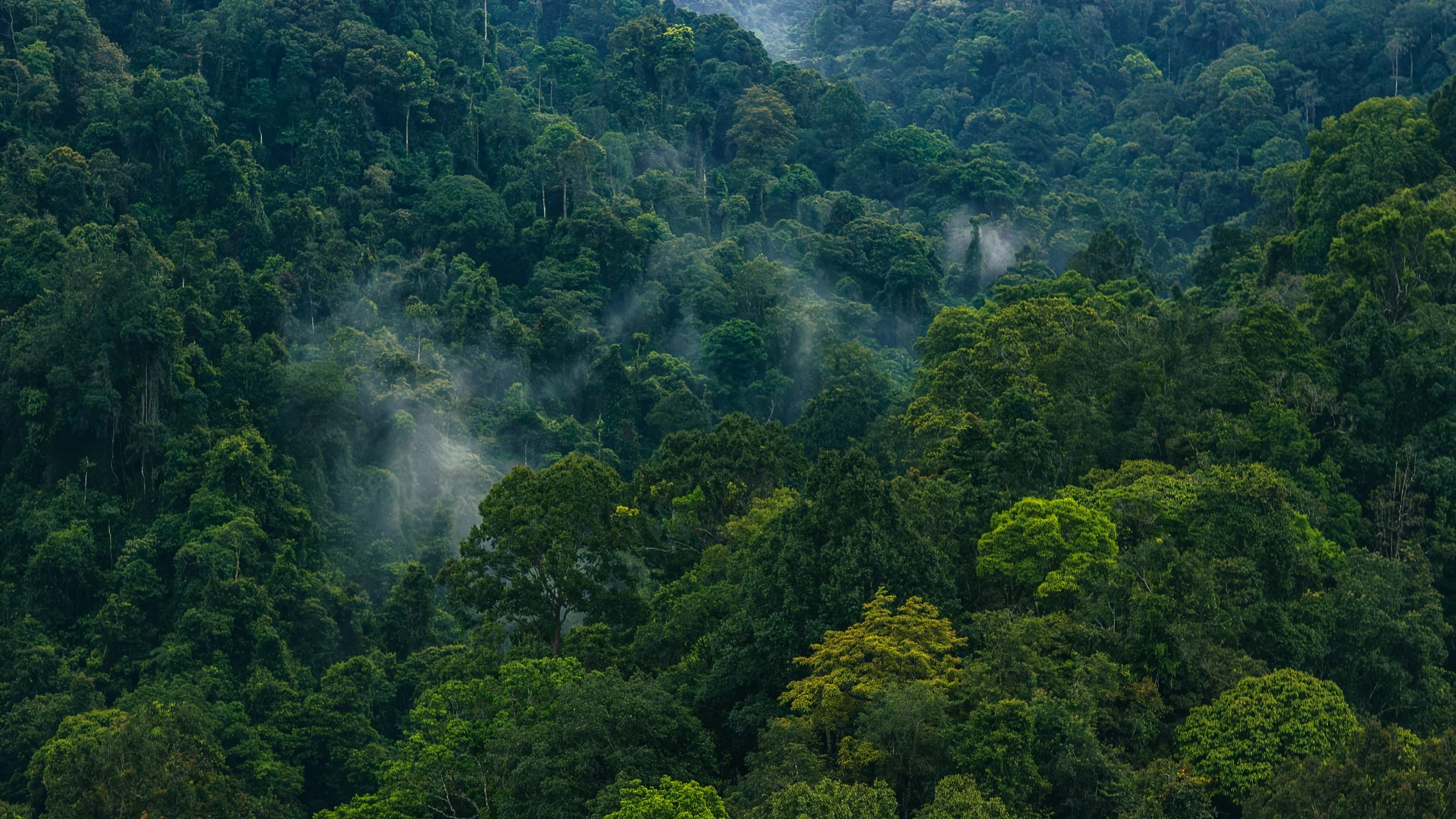
Gibbons are obligate arboreal primates, meaning they depend on intact forest canopy to survive
Gibbons rely on the forest, and the forest relies on gibbons
The Threats They Face
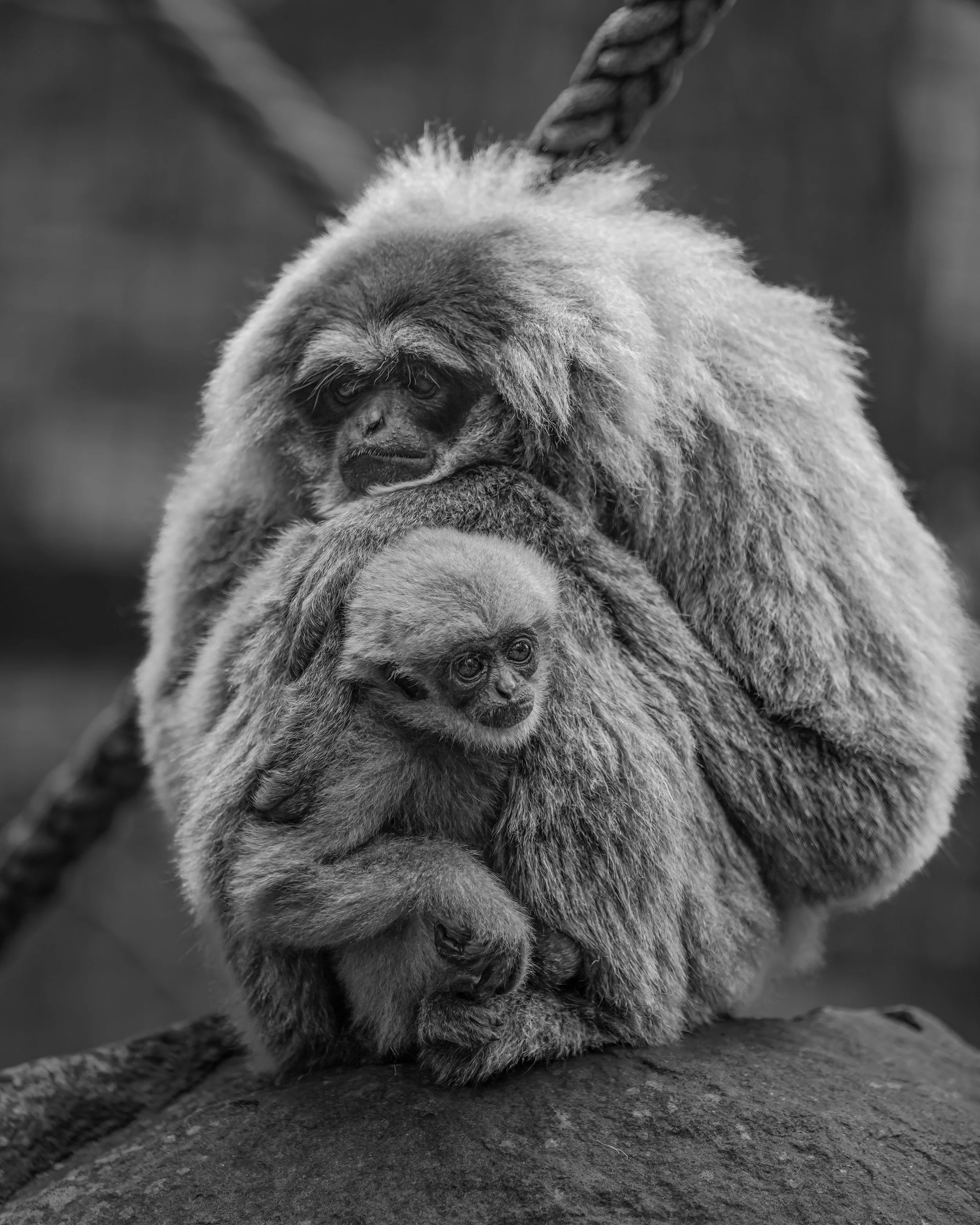
The IUCN Red List reports that 19 of the 20 known gibbon species are threatened with extinction:
5 Critically Endangered
14 Endangered
1 Vulnerable
The Hainan gibbon (Nomascus hainanus) is one of the world's rarest primates, with only 42 individuals remaining - the result of decades of habitat loss to plantation expansion and forest degradation on Hainan Island, China (IUCN 2025).
Another critically endangered small ape, the Cao Vit gibbon (Nomascus nasutus) is numbered at an estimated 100-130 individuals left in the wild (IUCN 2025).
Primary threats:
Habitat Loss:
Southeast Asia lost 28% of its natural forest cover between 2005 and 2015 (Van Phung et al., 2023) - driven by palm oil plantations, rubber cultivation, agriculture, and logging. From 1990-2010, an average of 1.6 million hectares of Southeast Asian Forest was lost annually (Estoque et al., 2019). Because gibbons depend almost entirely on closed-canopy habitat to move, feed, and breed, this kind of fragmentation is especially devastating; a forest with gaps is, functionally, a forest they can no longer use. Climate change further shrinks the continuous forest canopy needed for gibbons to survive, by making the region's forests more vulnerable to fire and extreme flooding (Cheyne et al, 2019), compounding losses already caused by logging and land conversion.
Illegal Wildlife Trade:
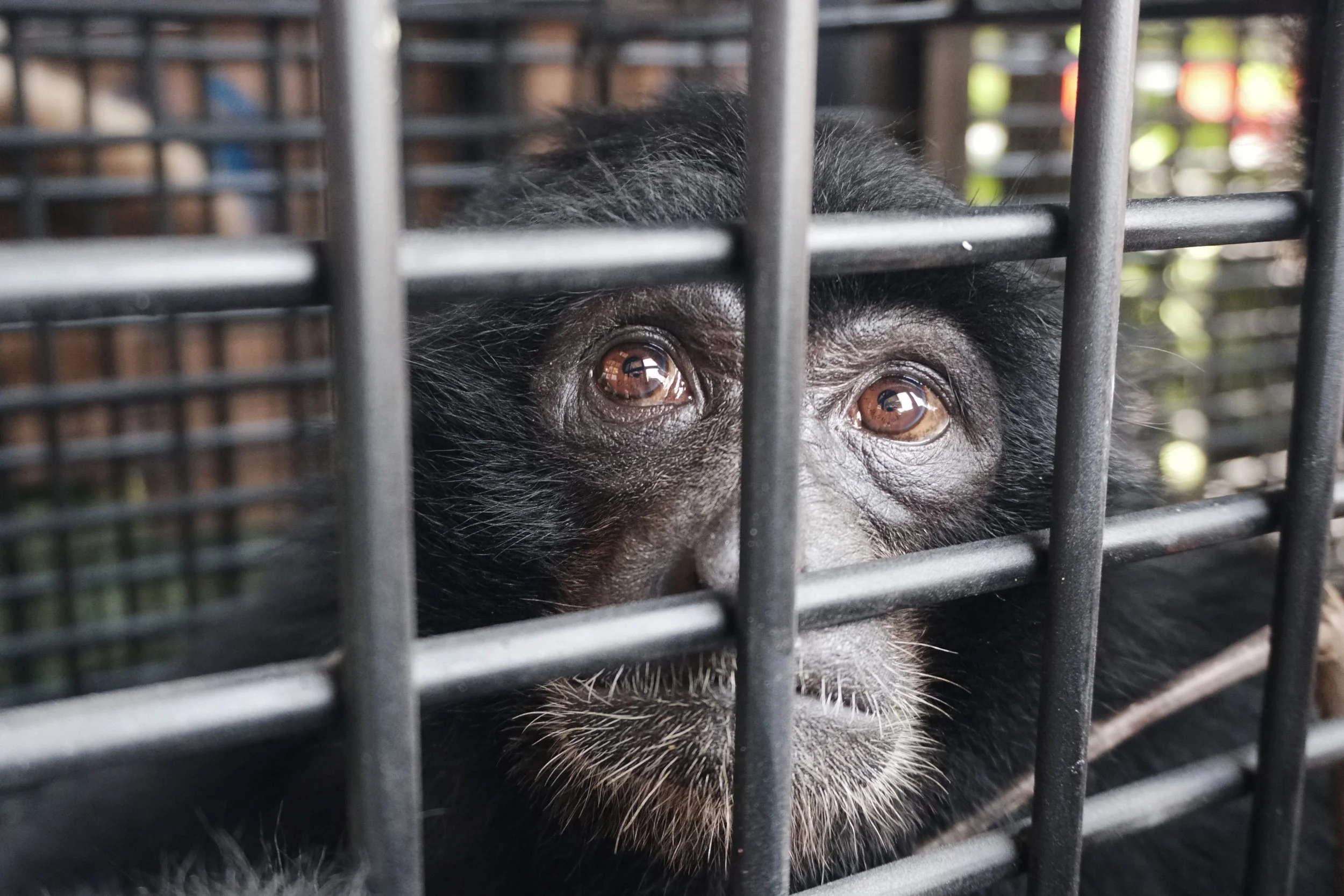
A TRAFFIC survey documented 386 gibbons confiscated from the trade in Sumatra between 2001 and 2008, with 68 individuals found at markets or kept as pets (Nijman 2009). The problem hasn't slowed: confiscations reached an all-time high in 2025, with seizures between January and August of that year alone accounting for 20% of all gibbons confiscated since 2016 (TRAFFIC 2025). Siamangs are widely reported as the most trafficked ape species globally (Nijman et al., 2009). Gibbons are targeted primarily for the exotic pet trade, as well as for use in traditional medicine.
Tourism Exploitation:
Gibbons are forced to perform and pose for photos, often under abusive conditions (Cheyne 2025; Brockelman & Osterberg, 2015).
Health Threats: A One Health Perspective
These pressures don't just threaten gibbon populations directly, they also raise the risk of disease. As humans encroach further into gibbon habitat, opportunities for contact between gibbons, people, and other animals increase, raising the risk of cross-species pathogen transmission (Thayaparan et al., 2014). Human-modified landscapes may also alter disease dynamics in more subtle ways: prolonged physiological stress can impair immune function, leaving wild animals more susceptible to pathogens and parasites.
The illegal wildlife trade compounds this risk. Close, sustained contact between humans and primates and the crowding of animals from different origins and species create conditions ripe for bidirectional pathogen spillover (Garber et al., 2024).

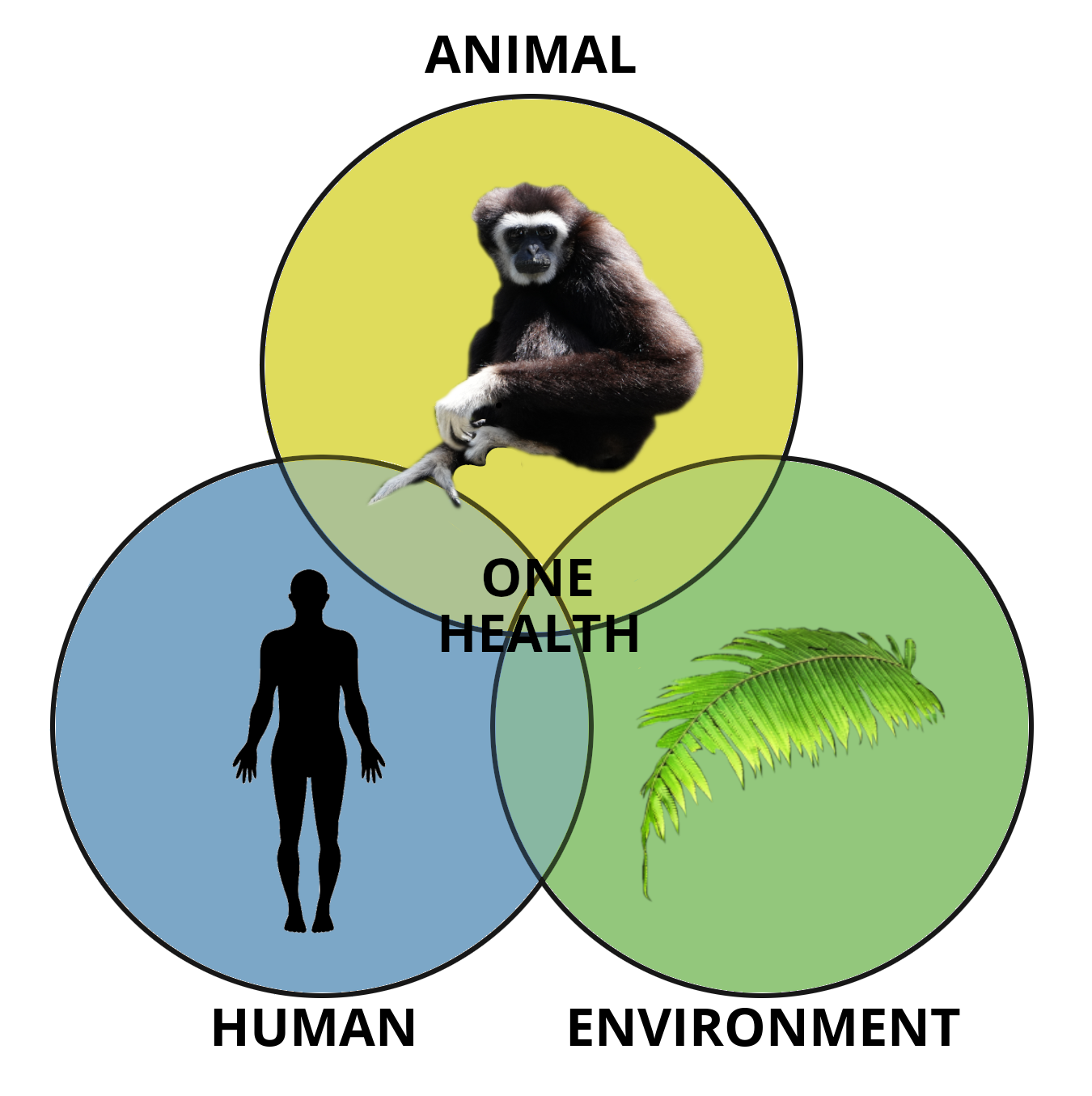
One Health is a multidisciplinary approach that recognizes the interconnectedness of human, animal, and environmental health.
This is where rescue and rehabilitation sanctuaries play a critical role. Facilities across gibbon range countries are often the first point of contact for injured, orphaned, displaced, or confiscated gibbons - putting them in a unique position to detect and monitor disease in incoming patients (Cheyne 2009; Leroux et al. 2019; Osterberg et al., 2015). This can offer early insight into emerging infection trends in wild populations, or reveal prior exposure to human pathogens before an animal was ever confiscated.
Infectious disease management is a serious concern in these settings. In nonhuman primate rehabilitation, zoonotic pathogens present a two-way hazard - for the animals in care, and for the veterinarians and staff working closely with them. And when gibbons are eventually released back into the wild, there's a further risk: unknowingly reintroducing an individual that carries a novel pathogen could threaten a naive population with no immunity to it. Understanding the full landscape of infectious disease in gibbons is a critical piece of the conservation puzzle.
Conservation: There is Hope
Recovery is possible. The Hainan gibbon population has rebounded from fewer than 10 individuals in the 1980s to 42 today through intensive habitat protection, anti-poaching patrols, and reforestation. It's proof that even the world's rarest primate can recover when given a real chance.
But recovery depends on more than habitat protection and enforcement, it also depends on the health of every individual gibbon. For such endangered species, the health of every individual matters. Conservation and health are, in practice, linked.
This intersection/interface is where the mission of the Gibbon Health Initiative lies. Gibbon Health Initiative works with 20+ rescue and rehabilitation centers across 8 countries, providing veterinary expertise in remote areas where gibbons need help most. We lend veterinary support to the centers on the ground doing the work of recovery, in close partnership with the organizations coordinating conservation strategy at a global scale.
GHI works in close partnership with the IUCN SSC Primate Specialist Group's Section on Small Apes, which coordinates global gibbon conservation strategy and maintains the authoritative species status assessments referenced throughout this page.
Across gibbon range countries, a network of rescue centers works to give confiscated, orphaned, and injured gibbons a second chance — through rescue, veterinary rehabilitation, and, when possible, release back into protected habitat. Through knowledge-sharing, capacity-building, and supporting rescue and rehabilitation efforts, we're working to ensure these extraordinary apes survive.
What You Can Do to Help Gibbons:
Choose sustainable palm oil products
Look for the RSPO (Roundtable on Sustainable Palm Oil) label when shopping. Find RSPO-certified products near you using the RSPO product finder:
Never pay for wildlife selfies or photo opportunities
Support legitimate rescue centers like those in the GHI network
Report wildlife exploitation to authorities
Share gibbon conservation stories to raise awareness
Educate others about threats facing gibbons
Join us in protecting gibbons
Where to Learn More:
Brockelman WY, Osterberg P. Gibbon Rehabilitation Project on Phuket successfully reintroduces animals into forest. Nat Hist Bull Siam Soc. 2015;60(2):65–68.
Chen Y, et al. Sympatric primate seed dispersers and predators jointly contribute to plant diversity in a subtropical forest. Oecologia. 2023;202:715–727.
Cheyne S. Challenges and opportunities of primate rehabilitation—gibbons as a case study. Endanger Species Res. 2009;9:159–165.
Cheyne SM, et al. Home range variation and site fidelity of Bornean southern gibbons (Hylobates albibarbis) from 2010–2018. PLOS ONE. 2019;14(7):e0217784.
Cheyne SM. SSA Policy — Gibbons Should NOT be Kept as Pets. IUCN SSC Primate Specialist Group, Section on Small Apes (SSA). 2025.
Clarke E, et al. The syntax and meaning of wild gibbon songs. PLoS One. 2006;1(1):e73.
Estoque RC, et al. The future of Southeast Asia's forests. Nat Commun. 2019;10:1829.
Garber PA, et al. Global wildlife trade and trafficking contribute to the world’s nonhuman primate conservation crisis. Front Conserv Sci. 2024;5:1400613.
Geissmann T. Mate change enhances duetting activity in the siamang gibbon (Hylobates syndactylus). Behaviour. 1986;96: 17–27.
Geissmann T. Duet-splitting and the evolution of gibbon songs." Biol Rev. 2002;77(1):57–76.
The IUCN Red List of Threatened Species. International Union for Conservation of Nature (IUCN).
Leroux N, et al. The reintroduction of captive-born pileated gibbons (Hylobates pileatus) into the Angkor Protected Forest, Siem Reap, Cambodia. Primate Conserv. 2019;33:47–57.
Maples EG, et al. Development of coordinated singing in a newly formed siamang pair. Zoo Biol. 1989;8:367–378.
Michilsens F, et al. Functional anatomy of the gibbon forelimb: adaptations to a brachiating lifestyle. J Anat. 2009;215(3):335–354.
Nijman V, et al. Saved from trade: donated and confiscated gibbons in zoos and rescue centres in Indonesia. Endanger Species Res. 2009;9:151-157.
Nijman V. An assessment of trade in gibbons and orang-utans in Sumatra, Indonesia: a TRAFFIC Southeast Asia report. Selangor, Malaysia: TRAFFIC; 2009.
Osterberg P, et al. Gibbon (Hylobates lar) reintroduction success in Phuket, Thailand, and its conservation benefits. Am J Primatol. 2015;7:492–501.
Reichard UH. Social Monogamy in Gibbons: The Male Perspective. In: Reichard UH, Boesch C (eds.). Monogamy: Mating Strategies and Partnerships in Birds, Humans and Other Mammals. Cambridge (UK): Cambridge University Press; 2003. p. 190–213.
TRAFFIC. Gibbons in peril as trafficking peaks. TRAFFIC; 24 Oct 2025.
Van Phung K, et al. Changes in suitable habitat for the critically endangered Northern white-cheeked gibbon (Nomascus leucogenys) in the Western Nghe An Biosphere Reserve, Vietnam: Implication for conservation. Nat Conserv. 2023;51:167–188.
Wang S, et al. Genome sequences of extant and extinct gibbons reveal their phylogeny, demographic history, and conservation status. Cell. 2026;189(1):34–51.
Thayaparan S, et al. Leptospiral agglutinins in captive and free ranging non-human primates in Sarawak, Malaysia. Vet World. 2014;7(6):428–431.